

Diamond test blocks are a critical component in various industrial applications, especially in precision measurement and calibration. As a supplier of diamond test blocks, one question that often arises from our customers is whether these blocks have good electrical conductivity. In this blog post, I will delve into the scientific aspects of diamond's electrical properties, how they relate to diamond test blocks, and the implications for different industries.
Understanding Diamond's Electrical Properties
Diamond is a form of carbon, where each carbon atom is covalently bonded to four other carbon atoms in a tetrahedral structure. This unique structure gives diamond many of its well - known properties, such as extreme hardness and high thermal conductivity. However, when it comes to electrical conductivity, the situation is more complex.
In its pure form, diamond is an insulator. The covalent bonds in diamond hold the electrons tightly in place, leaving no free electrons to conduct electricity. The energy gap between the valence band and the conduction band in diamond is very large, approximately 5.5 electron volts (eV). This means that a significant amount of energy is required to excite an electron from the valence band to the conduction band and enable electrical conduction.

However, diamond can be made to conduct electricity under certain conditions. One way is through doping. By introducing impurities into the diamond lattice, such as boron or phosphorus, it is possible to create either p - type (with holes as charge carriers) or n - type (with electrons as charge carriers) semiconductors. Boron - doped diamond (BDD) is a well - known example of a conductive diamond material. BDD has a relatively low resistivity and can be used in various electrical applications, such as electrodes in electrochemistry.
Electrical Conductivity of Diamond Test Blocks
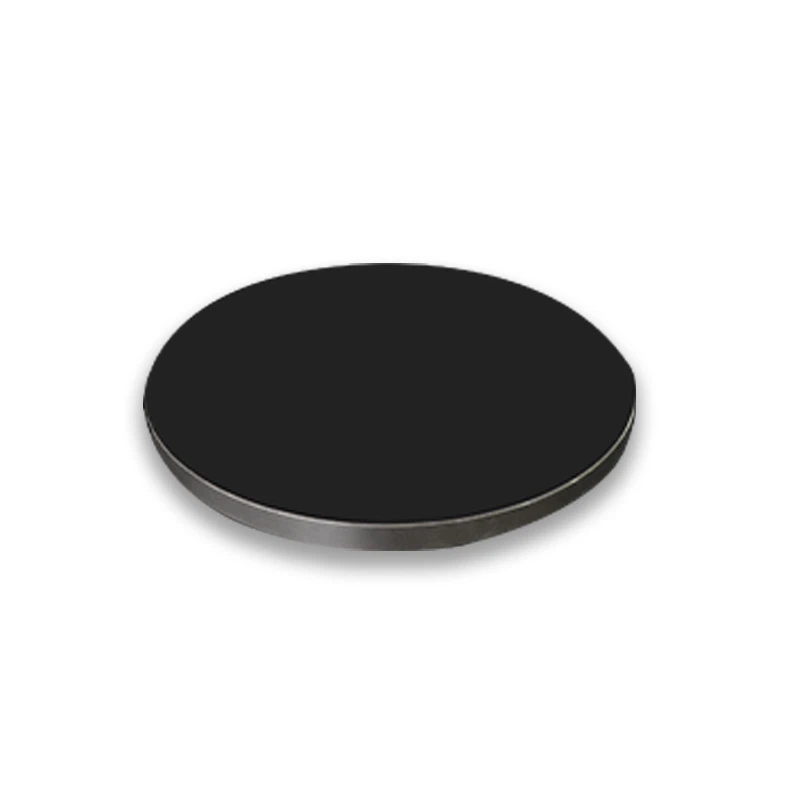
Most of the diamond test blocks we supply are made from natural or synthetic high - quality diamonds that are not intentionally doped for electrical conductivity. These blocks are primarily used for their mechanical properties, such as hardness and flatness, which are crucial for accurate calibration and measurement. As a result, these non - doped diamond test blocks have very poor electrical conductivity, similar to pure diamond.
The lack of electrical conductivity in non - doped diamond test blocks can be an advantage in some applications. For example, in industries where electrical insulation is required during precision measurement processes, non - conductive diamond test blocks can prevent electrical interference and ensure accurate results. They can be used in environments where electrical isolation is necessary to protect sensitive measuring equipment from electrical noise.
On the other hand, there are applications where electrical conductivity in diamond test blocks could be beneficial. In the field of electronics manufacturing, for instance, conductive diamond test blocks could be used for testing electrical contacts or for conducting electrical performance evaluations. If a customer has such requirements, we can explore the option of providing boron - doped diamond test blocks. These doped blocks can offer a controlled level of electrical conductivity while still maintaining the excellent mechanical properties of diamond.
Comparison with Other Test Block Materials
When comparing diamond test blocks with other common test block materials, such as cast iron test blocks, the difference in electrical conductivity is quite significant. Cast iron is a metal alloy, and metals are generally good conductors of electricity due to the presence of free electrons in their atomic structure. You can learn more about Cast Iron Test Blocks on our website.
The high electrical conductivity of cast iron test blocks makes them suitable for applications where electrical grounding or electrical testing is required. However, cast iron lacks the hardness and wear resistance of diamond. Diamond test blocks, even non - conductive ones, are much more durable and can maintain their precision over a longer period of time, especially in high - wear environments.
Applications of Conductive and Non - Conductive Diamond Test Blocks
Non - Conductive Diamond Test Blocks
- Precision Machining: In precision machining processes, non - conductive diamond test blocks are used to calibrate machine tools, such as lathes and milling machines. Their high hardness ensures that they can withstand the forces exerted during the calibration process without deforming, while their non - conductivity prevents electrical interference with the machine's control systems.
- Metrology Laboratories: Metrology laboratories rely on non - conductive diamond test blocks for accurate measurement of lengths, flatness, and angles. These blocks are used as reference standards, and their non - conductive nature helps to maintain the integrity of the measurement environment.
Conductive Diamond Test Blocks
- Electrochemical Applications: Conductive diamond test blocks, such as BDD blocks, can be used as electrodes in electrochemical cells. Their high chemical stability and electrical conductivity make them ideal for applications such as electro - oxidation, electro - synthesis, and electro - analysis.
- Electronics Testing: In the electronics industry, conductive diamond test blocks can be used to test the electrical performance of microchips, printed circuit boards, and other electronic components. They can provide a stable and reliable electrical contact for accurate testing.
Related Products in Our Catalog
In addition to diamond test blocks, we also offer a range of related products that can complement their use in various applications. Polishing Plates are essential for maintaining the flatness and surface finish of diamond test blocks. They can be used to polish the surfaces of the test blocks to ensure accurate calibration and measurement.
Our Abrasive Autofeed Cylinder is another useful product. It can be used to supply abrasives evenly during the lapping and polishing process, which is crucial for achieving the desired surface quality of diamond test blocks.
Conclusion and Call to Action
In conclusion, the electrical conductivity of diamond test blocks depends on whether they are doped or not. Non - doped diamond test blocks are excellent insulators, which is advantageous in many precision measurement and calibration applications. Doped diamond test blocks, on the other hand, can offer electrical conductivity and open up new possibilities in electrochemical and electronics applications.
If you are interested in learning more about our diamond test blocks, whether you need non - conductive or conductive ones, or any of our related products, please feel free to contact us. We are more than happy to discuss your specific requirements and provide you with the best solutions for your applications. Our team of experts is always ready to assist you in making the right choice for your industrial needs.
References
- "The Properties of Diamond" by J. E. Field.
- "Semiconductor Physics and Devices" by Donald A. Neamen.
- "Industrial Diamond Applications" by various authors in the diamond industry.


