

Hey there! As a supplier of Wax Liquid, I often get asked the question: "Does wax liquid attract dust?" It's a valid concern, especially for those who are considering using wax liquid in their industrial or household applications. In this blog post, I'll delve into this topic, sharing some scientific insights and my own experiences as a supplier.
First off, let's understand what wax liquid is. Wax liquid is a versatile product with various applications. You can check out more about it here: Wax Liquid. It's commonly used in industries like lapping and polishing, and it can also be used for bonding purposes. There are also related products such as Thin Film Bonding Wax and High Melting Point Thin Film Bonding Wax, which have their own unique properties and uses.
Now, back to the question at hand. Does wax liquid attract dust? Well, it depends on a few factors. To understand this, we need to look at the nature of wax liquid and how dust behaves.
Wax liquid is a sticky substance when it's in its liquid state. Once it dries or solidifies, it forms a kind of coating. This stickiness is what makes it useful for bonding and other applications, but it can also potentially attract dust. Dust particles are tiny and are constantly floating in the air. When they come into contact with a sticky surface, there's a chance they'll get stuck.
However, the extent to which wax liquid attracts dust isn't absolute. The environment plays a big role. In a clean, low - dust environment, the amount of dust that the wax liquid attracts will be minimal. For example, in a well - maintained laboratory or a cleanroom, where the air is filtered and the dust levels are extremely low, the wax liquid won't pick up much dust.
On the other hand, in a dusty industrial setting or a place with a lot of traffic, like a busy workshop, the wax liquid is more likely to attract dust. The more dust there is in the air, the greater the chance that dust particles will land on the wax liquid and stick to it.
Another factor is the type of wax liquid. Different wax liquids have different chemical compositions, and this can affect their dust - attracting properties. Some wax liquids are formulated to be more resistant to dust attraction. These might have additives or a specific molecular structure that reduces their stickiness to dust particles.
Let's take a closer look at the science behind dust attraction. Dust particles are usually charged. They can have a positive or negative charge, and this charge can interact with the surface of the wax liquid. If the wax liquid has an opposite charge or a charge distribution that attracts the dust particles, then the attraction will be stronger. However, many modern wax liquids are designed to have a neutral or non - attracting charge distribution to minimize dust attraction.
Now, let's talk about what you can do to minimize dust attraction if you're using wax liquid. One of the simplest things is to keep the area clean. Regularly clean the surfaces where the wax liquid is applied and the surrounding area. Use a vacuum cleaner with a fine filter to remove dust from the air and the surfaces. You can also use air purifiers to reduce the dust levels in the air.
Another option is to apply a protective coating over the wax liquid. There are some clear, non - sticky coatings available that can be applied on top of the wax liquid once it's dry. These coatings act as a barrier between the wax liquid and the dust, preventing the dust from sticking directly to the wax.
If you're using wax liquid in an industrial process, you can also use enclosures or hoods to protect the area where the wax liquid is being used. This helps to keep the dust out and maintain a cleaner environment.
As a supplier, I've seen customers have different experiences with dust attraction. Some customers in clean environments haven't had any issues with dust on their wax liquid, while others in dusty settings have had to take extra precautions. But overall, with the right knowledge and some simple steps, you can manage the dust attraction problem.
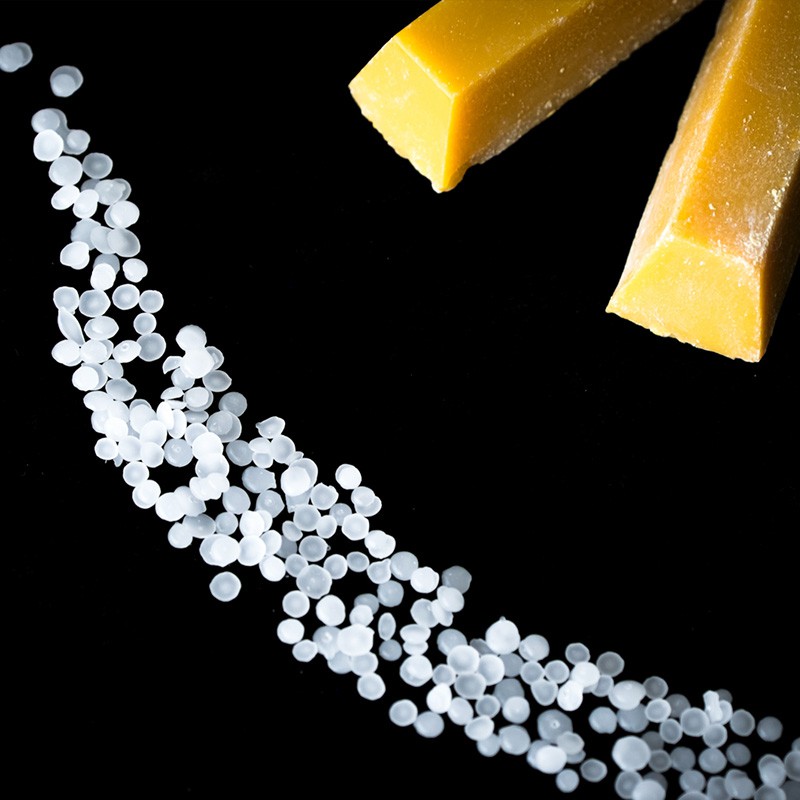

In summary, wax liquid can attract dust, but the degree of attraction depends on the environment, the type of wax liquid, and other factors. By understanding these factors and taking appropriate measures, you can use wax liquid effectively without being overly concerned about dust.
If you're interested in purchasing wax liquid or any of our related products, I encourage you to reach out for a discussion. We can talk about your specific needs, the type of environment you're using the wax liquid in, and find the best product for you. Whether you need a wax liquid that's highly resistant to dust attraction or one with specific bonding properties, we can help you make the right choice.
I hope this blog post has been helpful in answering your question about whether wax liquid attracts dust. If you have any more questions or need further information, feel free to leave a comment below.
References:
- General knowledge of wax chemistry and dust behavior in industrial and laboratory settings.
- Product specifications and research on different types of wax liquids.


